






A disorderly rise in bond yields has displaced the AI bubble as the biggest tail risk in September's Bank of America Global Fund Manager Survey, as investors also brace for the first flattening in the yield curve outlook since 2022.
The shift accompanies a broader pullback in optimism. BofA's composite sentiment index, based on cash levels, equity allocation and growth expectations, fell to 7 in September from 8 in August, while cash holdings rose from 3.5% to 3.9%, the largest single-month rise since March 2026.
"Investor sentiment pulled back from the very bullish August survey (was third most bullish survey since '22) to the least bullish in three months," BofA's strategists said.
Fund managers have grown more doubtful about the pace of central bank policy. Bank of America's Bull & Bear Indicator, a contrarian gauge of risk appetite, rose to 9.5 in September, above the 8 level that marks a sell signal, while the rising cash allocations also create a sell signal under the bank's methodology.
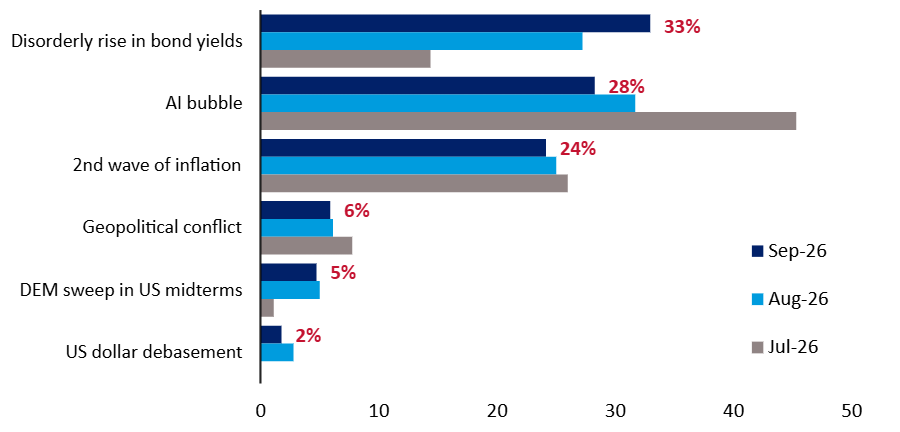
Bond yields become the biggest tail risk
Source: BofA Global Fund Manager Survey, Sep 2026
A disorderly rise in bond yields is now the biggest tail risk named by fund managers, cited by 33% of respondents in September, up from 27% in August. Fear of an AI bubble dropped to second place at 28%, down from 32% the previous month.
This is the first time bond yields have topped the tail risk ranking since AI bubble fears became the dominant concern. Geopolitical conflict, central bank rate hikes and dollar debasement have each held the top spot at points since 2011, according to the survey's long-running tail risk history.
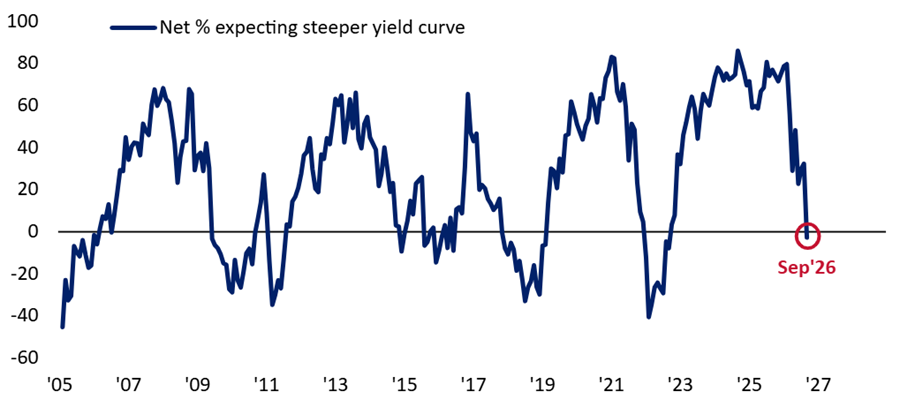
Yield curve expectations flip for the first time since 2022
Source: BofA Global Fund Manager Survey, Sep 2026
A net 3% of investors now expect the yield curve to flatten, the first such reading since September 2022. That compares with a net 32% who expected the curve to steepen in August.
Rate expectations moved in the same direction. A net 36% of fund managers expect higher short-term rates, the highest reading since September 2022.
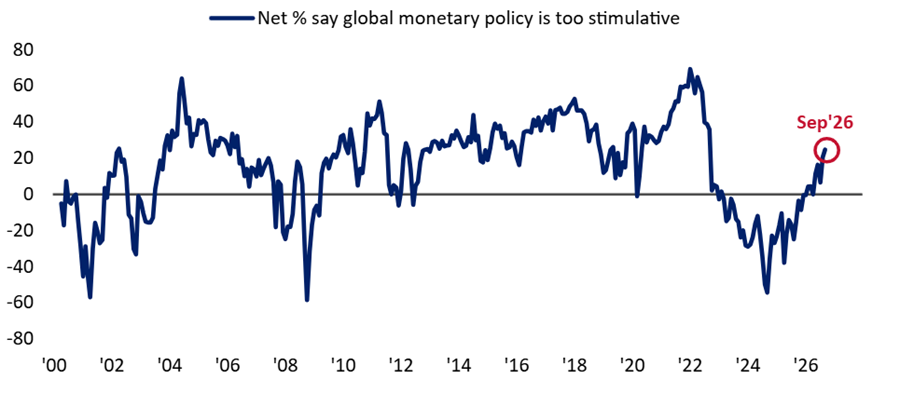
Monetary policy judged the most stimulative since 2022
Source: BofA Global Fund Manager Survey, Sep 2026
A net 25% of investors think global monetary policy is too stimulative, which is the highest reading since September 2022.
Confidence in the Fed's near-term path has also shifted. Just 52% of managers expect the Fed to avoid a rate hike before November's US midterms, down from 72% in August, while 41% expect a hike, up from 22%.
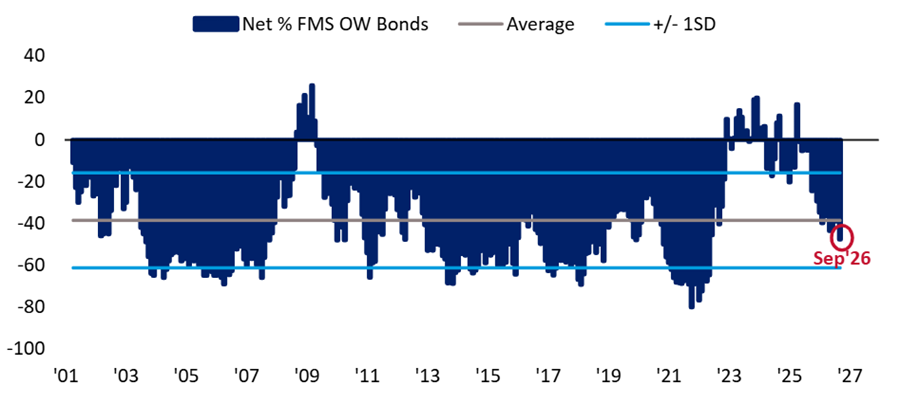
Bond underweight reaches its widest since 2022
Source: BofA Global Fund Manager Survey, Sep 2026
Fund managers are net 48% underweight bonds, the widest underweight since May 2022. This stance has been in place for 17 consecutive months.
Meanwhile, 27% said a rise in treasury yields to an attractive level, such as 6% on the 30-year yield, is the most likely trigger for a shift back to overweight bonds. Another 19% pointed to a major top in stock markets as the more likely catalyst.
AI capex conviction holds firm as bubble fears ease
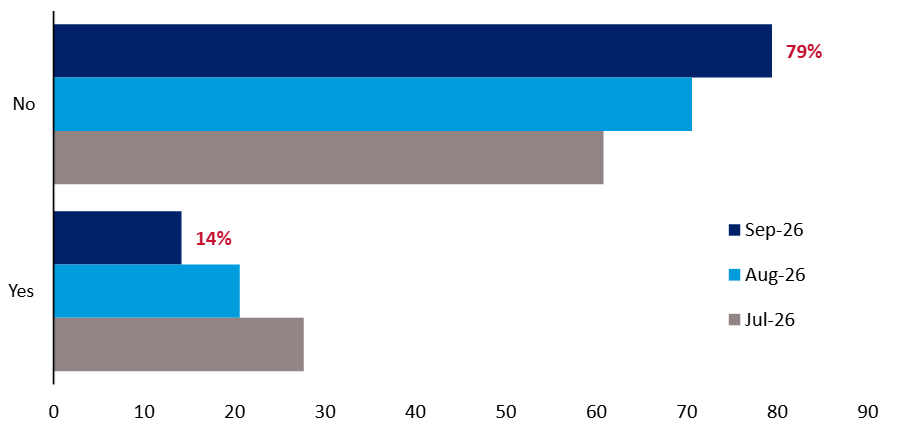
Source: BofA Global Fund Manager Survey, Sep 2026
Some 79% of managers do not expect an AI hyperscaler to announce a capex cut in 2026, up from 71% in August. Just 14% foresee a cut, down from 21%.
But a net 33% said companies are overinvesting, matching the record high set in February 2026. AI hyperscaler capex remains the most likely source of a systemic credit event, named by 42% of respondents (up from 38% in August).