






The AI trade has rewarded investors handsomely over the past three years. But, in its wake, it has left a trail of collateral damage.
In the UK, company share prices are being marked down not necessarily because of weakening fundamentals but because markets have decided they are on the wrong side of the AI revolution.
Yet some of these businesses are demonstrating their resilience. Rather than racing to automate, they are doubling down on the human element and benefiting from it.
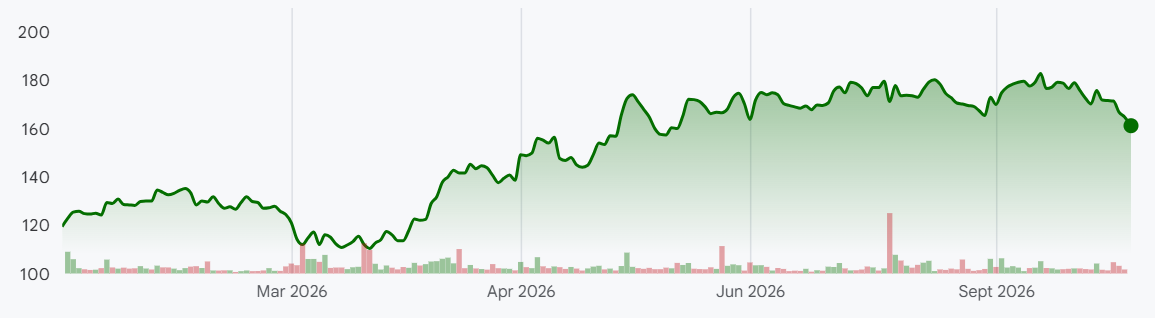
Metro Bank
Hywel Franklin, head of European equities at Mirabaud Asset Management, highlighted Metro Bank for its focus on enhancing the value of personal relationship banking.
“Mainstream banks are introducing more systems to drive efficiency through their internal processing: the idea being to process mortgages or other transactions with greater speed so each employee can get through more applications within the same time,” Franklin said.
“Metro Bank’s approach in contrast is to assign each customer with a personal contact who knows their business affairs in detail and remains their key contact over the long term. This is a much more traditional (some might say old-fashioned) approach.”
This more specialised way of dealing with customers has “resonated with specific clients who value the personalised relationship banking approach”, Franklin noted.
It is also paying off for the business, he said. Metro Bank logged a record six-month period in the first half of the year, as its underlying profit rose 34% year-over-year to £61m, as higher-margin lending, treasury asset repricing and cost discipline supported earnings growth.
The bank noted its return on average equity also rose by 270 basis points (bps) year-over-year to 7.5%, while its exit net interest margin increased by 30bps to 325bps.
Although Franklin acknowledged there are risks linked to the UK economy and execution going forward, he believes Metro Bank has the scope to “grow more strongly than many banks in Europe”.
“Valuation on current consensus is over 8x 2027 price-to-earnings (P/E) and 0.8x book value – given we see double digit earnings growth, this looks very attractive to us,” he added.
Metro Bank’s share price is up 35% over the year so far.
Stock price performance change YTD
Source: Google Finance
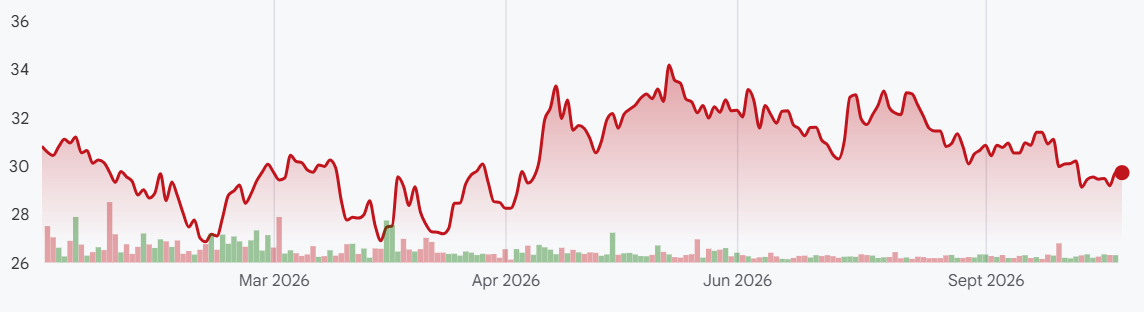
Compass Group
Not every business needs to automate its way to efficiency. One example is contract caterer Compass Group.
Nikki Martin, senior portfolio manager of global equities at Sarasin & Partners, said the core product is “still delivered by people, face-to-face”.
Martin noted that the business is also providing food and services to companies including AI-focused hyperscalers and other companies across the data centre ecosystem.
“It is effectively selling a human service into one of the fastest-growing parts of the economy,” Martin said.
In its latest quarterly results, Compass Group reported organic revenue growth of over 7%, with a client retention rate of 96%. In addition, half of its $4.3bn of new business wins over the past year came from organisations outsourcing for the first time.
“In other words, the main competitor is still in-house catering, not a technology disruptor,” Martin said.
Compass Group’s share price is down 3.5% year-to-date.
Stock price performance change YTD
Source: Google Finance
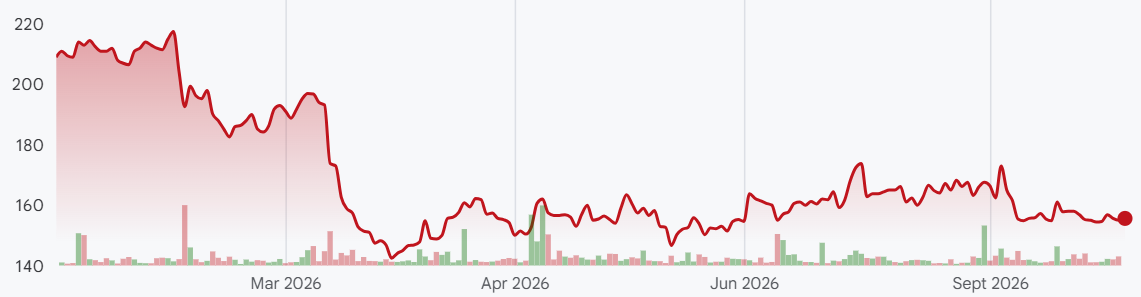
Alfa Financial Software
The software and services sector in the UK has been shaken up by worries over AI progress – a trend globally that has been referred to as ‘SaaSageddon’.
Gregor Paterson, co-manager of WS Amati UK Listed Smaller Companies, said: “The rate of progress in AI is mind-blowing but some software and services rely on the team behind it to deliver and this is not something a large language model (LLM) can replicate.”
He pointed to Alfa Financial Software as an example of such a company. It provides a global client base with an asset and leasing financial software platform. Specifically, he said the company has invested in a strong team that has held on to clients.
“Most tellingly, the churn rate among its clients – the number that move away to a competitor – is zero,” Paterson said.
“So there is particularly strong evidence that clients value the business – they do not leave. It is also somewhat fanciful to imagine the chief financial officer of a multinational telling her team to experiment around vibe-coding their own leasing and asset software. It’s too important and mistakes could be catastrophic.”
In September, Alfa Financial Software announced its half year results. Revenue in the first six months of the year grew 4% to £65.1m, underpinned by higher subscription revenue, which increased by 14% to £24.1m. Annual recurring revenue generated from long-term contracts with longstanding clients rose by 17%, while net revenue retention – the amount Alfa Financial Software sells to existing customers – rose by 110%.
The company noted that the early stages of its sales pipeline remains unaffected by macroeconomic uncertainty but noted delays in moving projects into signed contracts, prompting the business to reduce delivery revenue expectations for the year.
“The human aspect of the investment case is also evident in the structure,” Paterson added, noting that Alfa Financial Software is a founder-led business.
“The chairman [Andrew Page] and chief executive officer [Andrew Denton] receive the London living wage and the company has issued no new shares since its initial public offering in 2017. They control both expenses and equity issuance tightly, which shows that the team is motivated by the success of the shares first and foremost.”
Despite this resilience, the company’s share price has struggled alongside the wider software and services sector, down by more than 25% year-to-date.
Stock price performance change YTD
Source: Google Finance
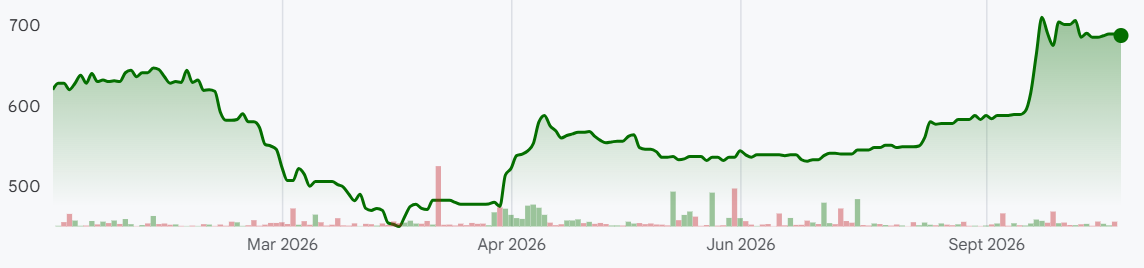
Keystone Law
LLMs are very good at many of the tasks attached to the legal profession, such as drafting contracts, reviewing documents, researching case law and preparing court filings. As such, the legal services sector at large is facing AI-related disruption.
However, Eric Burns, lead manager of the UK Buffettology fund, argued that companies within the sector are far more resilient and attractive than markets are pricing in, highlighting Keystone Law as an example.
“Arguably, the negative narrative [around the legal services sector and AI disruption] contributed to the share price of the company falling by 28% at one point this year,” he said.
“But a recent first half update from the company shows the business in rude health with trading significantly better than expected.”
This is in part driven by a 14% increase in average revenue per lawyer. Overall revenue climbed by 22.5% year-over-year to £66.3m while adjusted profit before tax surged 31.3% to £9.6m.
Adjusted earnings per share increased by 29.8% to 23.1p, outpacing profit growth due to the company’s £1.5m share buyback programme, completed in May 2026.
“Keystone’s lawyers operate across a broad range of disciplines including corporate, litigation, employment and property – and around 20 new principals are set to join this year,” said Burns.
“The one area where AI is perhaps having an impact is in the volume of AI-assisted employment claims being brought against businesses which, ironically enough, is a tailwind for law firms.”
He added that the current P/E ratio of 16x is attractive for a business which has grown earnings per share at a compound annual rate of 19% over the past five years.
Stock price performance change YTD
Source: Google Finance