


Savers with £10,000 in an account paying 2% could be £315 better off over a year by moving to the top one-year fixed rate, according to Moneyfactscompare.co.uk. The best deal available pays 5.15% (gross), against UK inflation of 3.5% in September. This means anyone with money in an account paying 2% is losing money, while the top payers are offering inflation-busting returns.
It is not just the top rate that is ahead, however. Moneyfacts counted 1,683 savings accounts that beat inflation, including 872 fixed-rate accounts and 425 fixed-rate ISAs. A year ago there were 978 such deals, when September inflation was 3.8%. In October 2024 there were 1,731, when it was 1.7%.
The top five-year bond pays 5.37%, compared with 2% in October 2021. On £10,000, that is about £1,950 more interest over five years.
Caitlyn Eastell, personal finance analyst at Moneyfactscompare, said volatile swap rates "have created uncertainty for borrowers [and] helped push fixed-rate bonds to their most attractive levels in years".
"Top fixed terms of one year or more have climbed above 5% for the first time since December 2023, giving savers a timely opportunity to secure a competitive return and protect themselves against falling rates in the future," she said.
Easy-access accounts, which allow withdrawals at any time, pay up to 4.89%, up from 0.65% five years ago.
“However, improvements across the market may not translate into better rates on existing accounts,” Eastell said. “Savers should regularly review what they are earning and compare alternatives, as loyalty to a provider does not always pay.”
The Moneyfacts average new savings rate is 3.78% gross, which, based on £10,000, is £28 ahead of inflation over a year, as the chart below shows. Since December 2025, the average has beaten CPI by less than one percentage point at each quarterly reading, and it fell below inflation in June and September 2025.
Interest and real gain on £10,000 saved for one year
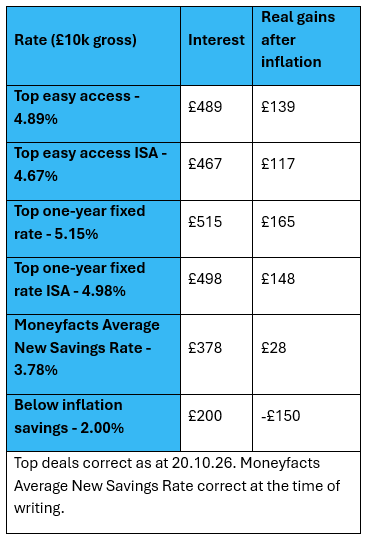
Source: Moneyfactscompare
Sarah Coles, head of personal finance at AJ Bell, said: “If you leave your money languishing with a high street bank earning next to nothing, higher inflation is going to be consuming the spending power of your savings even faster.
“It can be difficult to spot when you see interest being paid and you feel better off, but over time your savings are dwindling.”